
Steady in the Unknown
November 17, 2026
As Maria Baca continues through FranU’s Family Nurse Practitioner program, she’s beginning to see patient care through a different lens.
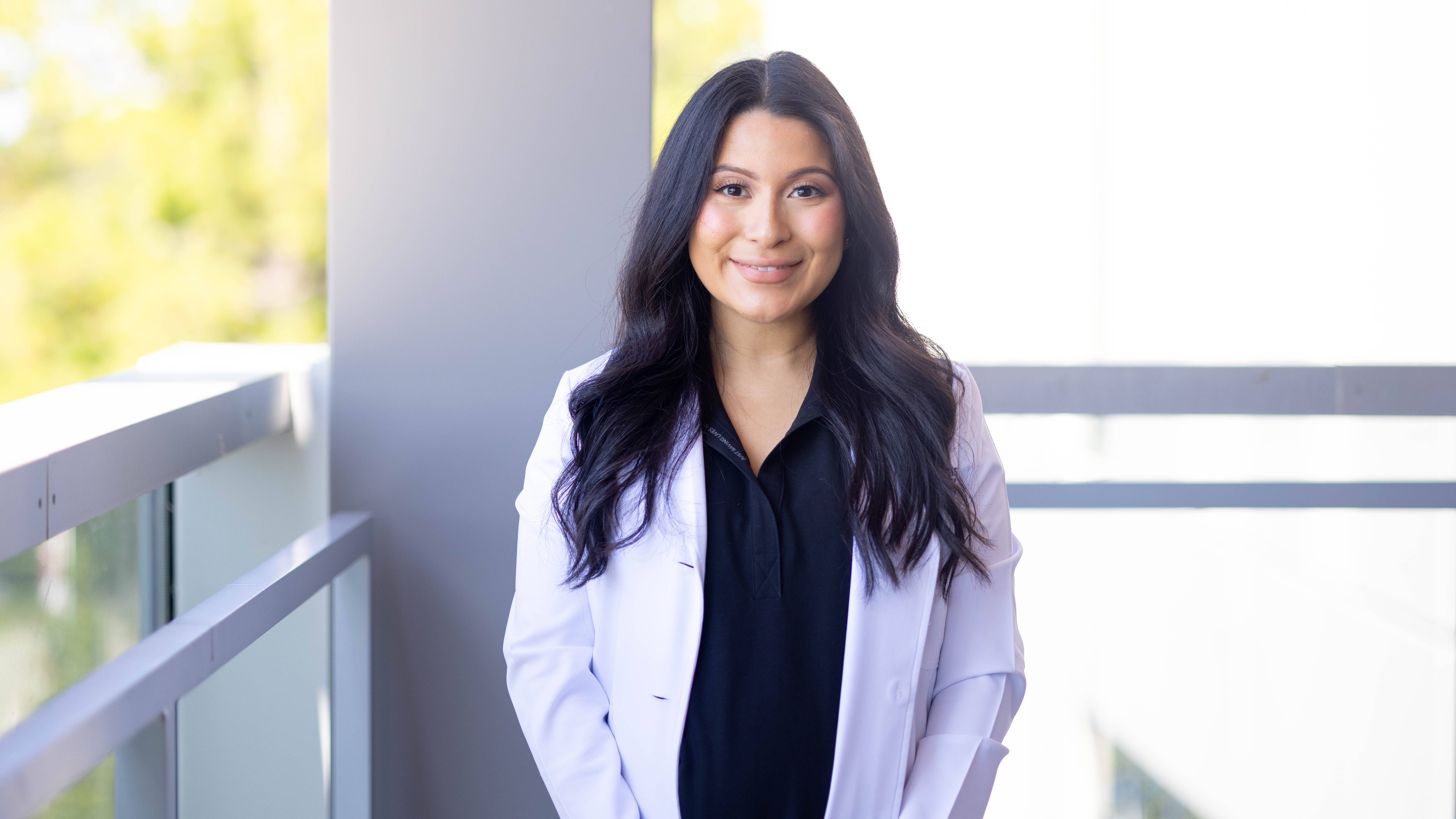
The transition from registered nurse to nurse practitioner has challenged her to think beyond immediate symptoms and focus on the bigger picture of a patient’s health.
“One thing that’s really surprised me is how much more ‘big picture’ thinking is involved as an NP,” Baca said. “As a Registered Nurse, I was focused on what was happening right now and how to respond. Now, I’m thinking about the ‘why,’ what could happen next and how to prevent it.”
That shift has changed the way she approaches patient care.
With something like high blood pressure, I’m not just noting it,” she said. “I’m thinking about lifestyle, medications, long-term risks and how it fits into the patient’s overall health. It feels like I’m putting pieces of a puzzle together instead of just reacting to one piece at a time.”
While her clinical knowledge has grown throughout the program, some of the most important lessons have come through patient interactions.
Baca recalls one encounter with a particularly uneasy patient. Instead of rushing into questions, she slowed down and gave the patient space to share their concerns.
That experience reminded me that patients don’t expect perfection; they just want to feel heard and respected,” she said.
Her preceptors have also played an important role in shaping the kind of provider she hopes to become. One moment particularly stands out.
“I had a preceptor who handled a really anxious patient so gently and calmly, and it stuck with me,” she said. “The patient was worried about a possible diagnosis, and instead of rushing, my preceptor just sat with them, listened and validated how they were feeling.”
“It wasn’t anything dramatic,” she said. “It was just very present, very human. That really impacted me. I’ve been trying to carry that into my own interactions by slowing down, listening fully and remembering that how we make patients feel matters just as much as what we say.”
The program has also pushed Baca outside of her comfort zone, helping her become more confident in uncertainty.
One mindset I’ve really grown into during this program is being okay with not having all the answers right away,” she said. “At the beginning, that felt uncomfortable—I was so used to being task-oriented and confident in my role as an RN. But now, I’m learning to slow down and trust the process.”
She remembers one formative patient encounter involving several vague symptoms that didn’t immediately point to a clear answer. Instead of becoming overwhelmed, Baca relied on her clinical reasoning and worked through it step by step.
“That was a moment when I realized I was changing,” she said. “I felt more thoughtful and less rushed, and that gave me confidence in a different way.”
As she continues working in different clinical settings, there’s one specialty she goes back to: palliative care. Her experiences have influenced her desire to care for the whole person, not just their symptoms, and to support patients during some of life’s most difficult moments.
It’s not always about fixing something,” Baca said. “It’s about comfort, dignity and support. I think it resonates with me because it reflects a deeper kind of care, one that feels very meaningful and aligned with why I went into this field.”
After graduation, Baca hopes to carry both confidence and compassion into every patient interaction. She’s getting there by building a solid foundation, staying curious and learning from every patient encounter.
“I also want to continue growing in how I connect with patients, because I’ve seen how much that matters,” Baca said. “My goal is to provide care that’s not only safe and knowledgeable, but also kind and reassuring.”
Share